History

Six centuries of the same argument

Georgism takes its name from one man, but the idea is much older than him and far wider than his followers. It is simply the observation that the value of land and natural resources is created by the whole community and belongs to it, while the value of everything people make belongs to the people who made it. That argument has been fought over on English commons, in French salons, in the House of Commons and, most successfully, in the capitals of East Asia.

1381-1649

Commons, Levellers and Diggers

Long before anyone wrote of political economy, the English argued about the ground. The rising of 1381, the anti-enclosure revolts of the Tudor century and the pamphlet wars of the 1640s all turned on the same grievance: land held in common had been fenced off by men who had not made it.

The Levellers demanded that the law stop treating landed property as a source of political privilege. Gerrard Winstanley's Diggers went further, planting crops on St George's Hill in 1649 and declaring the earth a 'common treasury', not a call to confiscate what people build, but a refusal to accept that the soil itself could be private in the way a plough is.

1750s, 1790s

The Physiocrats and the single tax

In France, Quesnay, Turgot and Mirabeau built the first systematic school of economics and reached a startling conclusion: since the produit net, the surplus above the cost of labour and capital, arises from land, the state should raise its revenue there and nowhere else. Turgot's impôt unique is the ancestor of every single-tax proposal since.

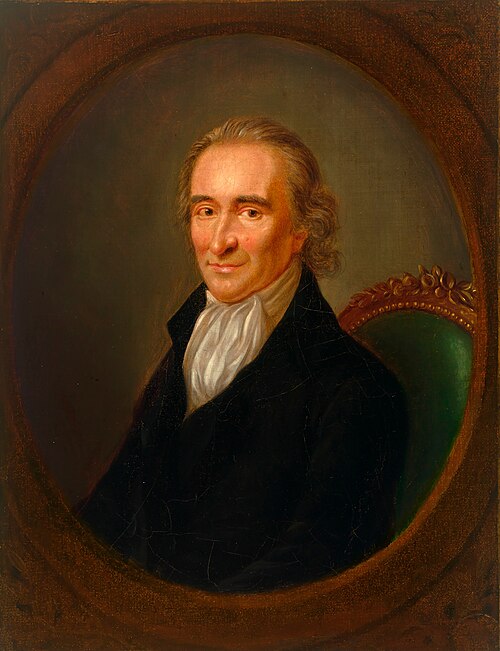
In England Thomas Paine published Agrarian Justice in 1797, arguing that cultivated value belongs to the cultivator but the value of the earth itself belongs to the community, and Thomas Spence campaigned for parish ownership of land with the rent paid out to residents.

1776-1870

Classical economics

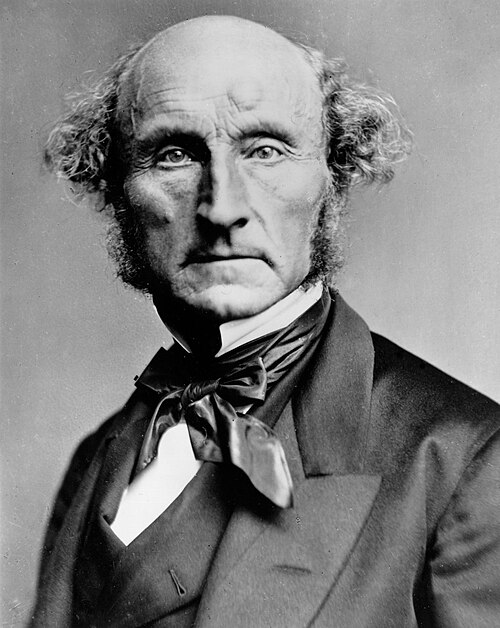
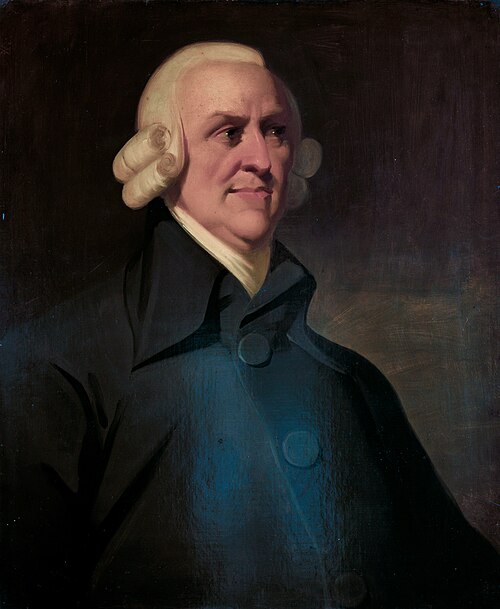
Adam Smith observed that ground rents are the tax base least likely to do harm, because a charge on them discourages nothing. Ricardo showed that rent is a residual, it rises as population and industry advance, without any effort by the owner. John Stuart Mill drew the political conclusion and helped found the Land Tenure Reform Association to capture the 'unearned increment'.

By the middle of the nineteenth century the economics was settled among economists. What was missing was a movement.

1879-1900

Henry George and the Single Tax movement

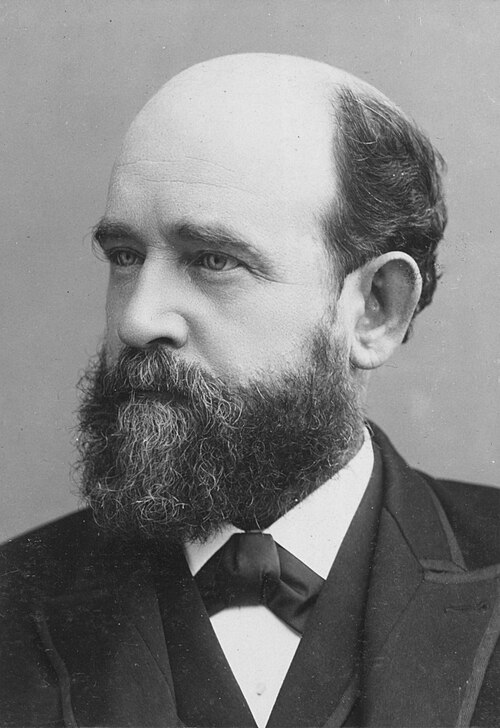
Progress and Poverty appeared in 1879 and became one of the best-selling books of the century, outsold in the English-speaking world only by the Bible. George's question was plain: why does poverty deepen as wealth increases? His answer was that the gains of progress are absorbed as land rent, and his remedy was to take that rent for public revenue and abolish taxes on labour and enterprise.

The effect in Britain was immediate. George's lecture tours of 1882 and 1884 filled halls from Glasgow to Cardiff; the Scottish Land Restoration League, the English Land Restoration League and hundreds of local single-tax societies followed. Georgism shaped the early Labour movement, Liberal land reform and the Irish land agitation alike, it was for a generation the common property of the British left and the radical right at once.

1909-1931

The People's Budget and the British near miss

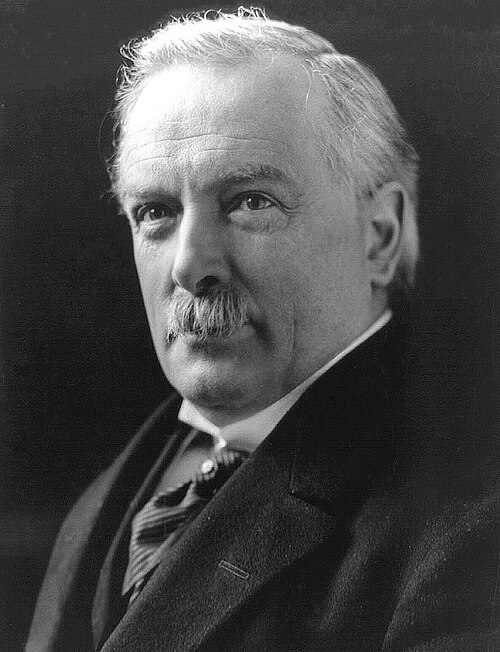
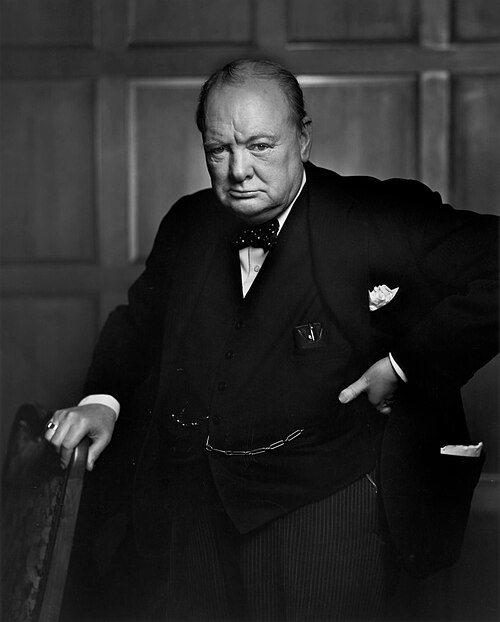
Lloyd George's 1909 budget carried a land value duty and a tax on the unearned increment, and the fight over it broke the power of the House of Lords. Churchill, then a Liberal, made the Georgist case in Parliament as forcefully as anyone ever has: the landlord 'contributes nothing to the process from which his own enrichment is derived'.

The land valuation was begun, then abandoned in wartime. A second attempt in Snowden's 1931 budget died with the government that passed it. Britain has come closer to taxing land value than almost any country, twice, and stopped both times.

1900-1950

Application overseas

Where the idea could be applied on new ground, it was. Site-value rating spread through Australian and New Zealand municipalities, South African cities, western Canada and Denmark, where the Retsforbundet (Justice Party) entered government on an explicitly Georgist programme. In the United States, Pittsburgh and Scranton taxed land at higher rates than buildings for most of the twentieth century.

In Britain the movement narrowed into education and lobbying, the Henry George Foundation from 1907, the School of Economic Science, the land-tax campaigns still running today.
The decisive century

How land reform built the Far Eastern miracle

The economies that grew fastest in the twentieth century were not the ones with the lightest regulation or the deepest capital markets. They were, almost without exception, the ones that broke the grip of the landholder first and then kept the rising value of land in public hands, and taxed work and enterprise lightly because they could afford to.

Taiwan

1949 onwards

Sun Yat-sen had read Henry George and wrote the equalisation of land rights into the founding doctrine of the Republic of China: 'the land tax as the only means of supporting the government is an infinitely just, reasonable and equitably distributed tax'. After 1949 the Kuomintang carried out the Land-to-the-Tiller programme, with landowners compensated in bonds and industrial shares, and taxed land value increments at up to 50 per cent. Taiwan's smallholder agriculture funded its industrial take-off, and the land value increment tax remains one of the clearest working examples of Georgist collection anywhere.

South Korea

1948-1990

Land reform under the first Republic broke up the tenancy system that had absorbed most of the agricultural surplus, and the resulting owner-occupier farming is widely credited as a precondition of the industrial boom. In 1989 Korea went further with the Land Public Concept reforms, an excess land holding tax, a development gains tax and a levy on land value increments, brought in explicitly to stop speculation eating the growth.

Japan

1873 and 1946

The Meiji land tax reform of 1873 replaced a rice levy with a cash charge on assessed land value and became the principal revenue of the modernising state, industrialisation funded from the ground. The post-war reform of 1946-50 then transferred tenanted land to those who worked it, and the recovery followed.

Singapore

1966 onwards

Singapore did not tax land rent so much as keep it. The Land Acquisition Act let the state buy land at pre-development value; public ownership rose from roughly a third of the island to about nine-tenths, and the uplift created by public investment returned to the public purse through leasehold premiums rather than to private speculators. That captured rent built the housing programme and kept taxes on work and enterprise low.

Hong Kong

1843 onwards

All land is held on government lease. Land premiums and rates have at times funded a third or more of public spending, which is why Hong Kong could run some of the world's lowest income and profits taxes. It is also a warning: leasing land in restricted quantities collects the rent while keeping housing scarce, which is not what Georgists ask for.

Mainland China

1988 onwards

Urban land remains publicly owned and is granted on term leases. Land transfer revenue has at points exceeded a third of total government income and paid for the infrastructure of three decades of urbanisation, public capture of land value on an unprecedented scale. It has also been run as one-off sales of long leases rather than an annual charge, producing exactly the debt and bubble problems Georgists predict when rent is capitalised and sold rather than collected as it accrues.

The Gulf states

1930s onwards

Kuwait, Qatar, the UAE and Saudi Arabia rest on the other half of the Georgist claim: that the value of natural resources belongs to the community, not to whoever holds the title. Public ownership of the oil, with the rent funding the state, is why these countries levy almost no tax on wages or profits. Saudi Arabia's white land tax of 2016 goes further still, charging owners of undeveloped urban land to force it into use. Their sovereign wealth funds are resource rent invested rather than consumed, the method Georgists recommend and the reason Britain's North Sea settlement looks so poor by comparison.

None of these countries adopted the full single tax, and several made the mistake of selling land rent as a lump sum instead of collecting it year by year. But the pattern is hard to miss: every one of them funded a large part of its rise from land and natural resources rather than from wages, which is precisely the settlement Britain began in 1909 and never finished.

In good company

Who has made this argument

Taxing land value is one of the very few proposals that has been endorsed by conservatives and socialists, novelists and Nobel laureates, and by economists who agreed on almost nothing else.

Portrait of Henry George

Henry George

American political economist, 1839-1897

We must make land common property. Take the rent for public use, and abolish every tax upon industry and thrift.
Portrait of Adam Smith

Adam Smith

Scottish philosopher of political economy, 1723-1790

Ground rents are a more proper subject of taxation than the rent of houses, nothing can be more reasonable.
Portrait of Thomas Paine

Thomas Paine

English radical, 1737-1809

Cultivation is the improvement made by labour. The earth in its natural state was the common property of the human race.
Portrait of John Stuart Mill

John Stuart Mill

English economist and MP, 1806-1873

Landlords grow richer in their sleep, without working, risking or economising. What claim have they to the increase?
Portrait of David Lloyd George

David Lloyd George

British Chancellor and Prime Minister, 1863-1945

The land, which is the original source of all wealth, is the essential basis of all our national life.
Portrait of Winston Churchill

Winston Churchill

British Prime Minister, 1874-1965

The landlord contributes nothing to the process from which his own enrichment is derived. Roads are made, services are improved, and the landlord sits still.
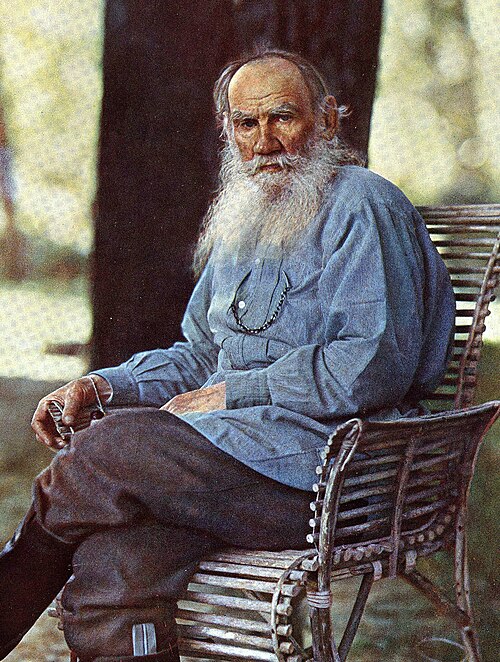
Portrait of Leo Tolstoy

Leo Tolstoy

Russian novelist, 1828-1910

People do not argue with the teaching of George; they simply do not know it. And it is impossible to do otherwise with his teaching, for he who becomes acquainted with it cannot but agree.
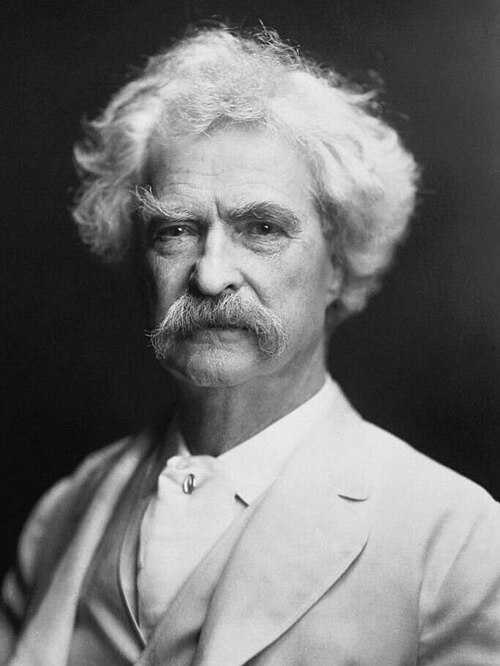
Portrait of Mark Twain

Mark Twain

American writer, 1835-1910

A man who owns a hundred vacant lots in a growing city is a man who is paid for doing nothing at all.
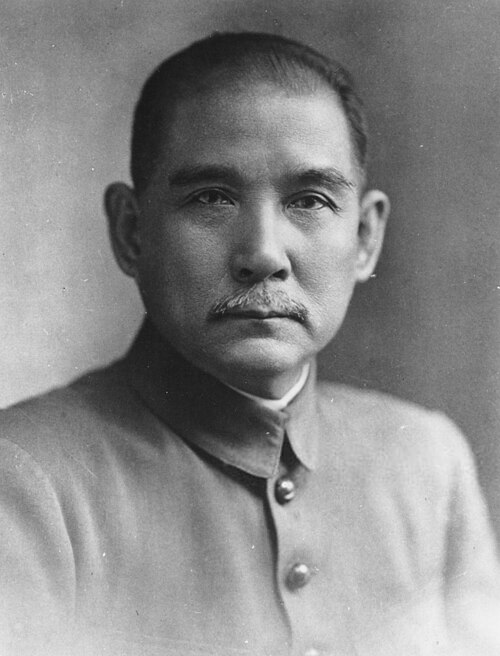
Portrait of Sun Yat-sen

Sun Yat-sen

Founding president of the Chinese Republic, 1866-1925

The land tax as the only means of supporting the government is an infinitely just, reasonable and equitably distributed tax.
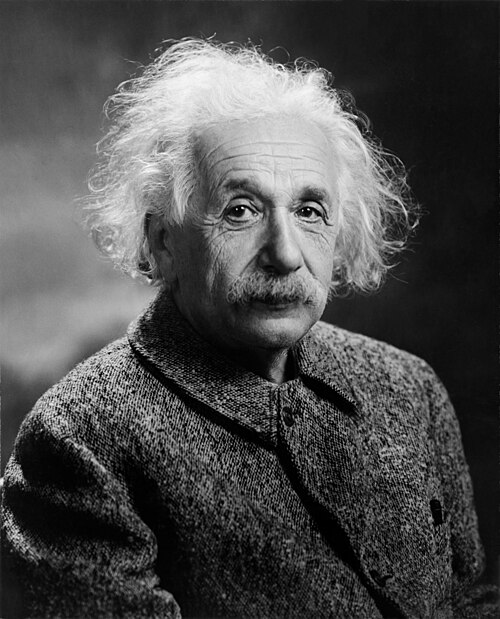
Portrait of Albert Einstein

Albert Einstein

Physicist, 1879-1955

Men like Henry George are rare, unfortunately. One cannot imagine a more beautiful combination of intellectual keenness, artistic form and fervent love of justice.

And many more besides

Alfred Marshall · Sun Yun-suan · Milton Friedman · Joseph Stiglitz · Paul Krugman · William Vickrey · James Tobin · Herbert Simon · Franklin D. Roosevelt · Clement Attlee · Keir Hardie · George Bernard Shaw · Helen Keller · John Dewey · Aldous Huxley · Elizabeth Magie

Milton Friedman called a tax on the unimproved value of land the least bad tax there is. Joseph Stiglitz showed that a well-run city could fund itself from land rent alone. Elizabeth Magie invented the board game that became Monopoly to teach exactly this lesson, and the version we all play is the one she wrote to demonstrate the problem, not the one she wrote to demonstrate the cure.

Portraits are public domain images via Wikimedia Commons. Quotations are abridged for length; sources are given in the works listed on our links page.